
A guest blog by Kelly Hannaghan
Over the past few years, I’ve worked with many children and young people who struggle with school attendance due to feeling overwhelmed or distressed. This is often described as Emotionally Based School Avoidance (EBSA), and it’s very different from truancy or simple “non-compliance.”
Children experiencing EBSA usually want to be in school; they just feel unable to manage the emotions and anxiety that going to school triggers. This might appear to be an emotional outburst, panic, shutdown, physical illness, refusal to exit the car, or simply being unable to walk through the school gates.
And because none of this feels within the child’s control, the whole situation can quickly become emotional and stressful for families and schools as well. That’s why curiosity, compassion and collaboration are key.
What EBSA Can Look Like in Real Life
Some of the signs we might notice include:

EBSA often sits alongside anxiety, autism, ADHD, learning differences or past experiences that have shaped the child’s sense of safety. But every child has their own story, so listening really matters.
A Key Principle
This isn’t 'I Won’t', it’s 'I Can’t Right Now'
When a child is in EBSA, their nervous system is responding as if school is unsafe, even if logically everyone knows it isn’t. Their body is saying fight, flight or freeze.
If we respond with pressure, threats or punishment, that distress usually increases. However, when we respond with empathy and structure, children begin to feel safe again, and safety is the foundation for returning to school.
EBSA is driven by a range of psychological factors, including:
Heightened anxiety and stress: The school environment may feel overwhelming, triggering avoidance behaviours.
Social and relational difficulties: Challenges with peer relationships, bullying, or struggles in engaging with teachers can exacerbate school-related distress.
Sensory sensitivities: Students with sensory processing differences may find the school setting overstimulating.
Separation anxiety: Younger children or those with attachment differences may find the school setting overstimulating.
Underlying mental health conditions: Conditions such as generalised anxiety disorder, social anxiety, or depression can manifest in school avoidance.
It’s important to remember that there is often not one single cause of EBSA; the causes may be complex and multifaceted.
Preventing EBSA: What Schools Can Do Proactively
Here are some whole-school approaches that make a real difference:
Supporting Students Already Struggling With EBSA

Step 2: Build a Support Plan Together
This should include:
✔ the student
✔ parents/carers
✔ school staff
✔ any professionals already involved
The plan can map out triggers, helpful strategies, and a gentle, phased approach back into school if attendance has already dropped.
Step 3: Reduce Barriers in School
In-class support
|
Emotional support
|
Relational support
|
A gradual return works best. Moving too fast can be overwhelming, and moving too slowly can reinforce avoidance.
Sometimes that first step is simply:
Sitting in the car on site
Then, walking to the reception
Then, spending five minutes with a trusted adult
OR
Adjusting Arrival Times: Consider starting later or earlier to avoid the busiest times.
OR
Setting up partial days: Morning or afternoon sessions can serve as a stepping stone to full-day care. The goal is to make school feel less overwhelming.
Working Alongside Parents, Not Against Them
Parents of children with EBSA are often exhausted and worried. They may also be dealing with panic, aggression, or extreme distress at home. We support best when we:
Listen and validate
Agree on clear communication
Share calm, practical strategies
Avoid assumptions or blame; parents are nearly always doing their absolute best.
Key contacts, regular updates, and a shared plan go a long way.
The message should be:
“We’re on the same side, and we will work through this together.”
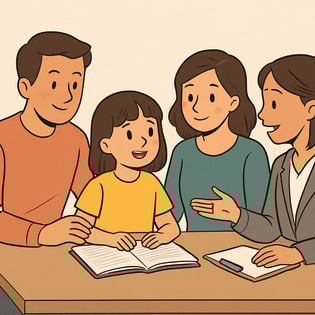
Some children will benefit from involvement with Educational Psychology, CAMHS, specialist teachers or Early Help. Keeping good records of support and patterns of need helps referrals progress more smoothly.
A Gentle Reminder: What Usually Doesn’t Help
- Threats of fines as the first step
- Labelling the child as defiant
- Comparing them with siblings or peers
- Forcing immediate full-time attendance
- Removing all enjoyable activities at home
These approaches often increase shame and fear, the opposite of what EBSA needs.
And Finally, Look After Staff Too
Supporting EBSA can be emotionally heavy work. Staff need space for reflection, teamwork and professional development. When adults feel supported, children benefit.
'EBSA is about distress, not defiance'.

Listen to the audio version created using Notebook LM
Resources from Local Authorities to support EBSA:
- Lancashire Local Authority information
- Suffolk Council information and support
- Kent Local Authority online resource
Connect with the Author
LinkedIN: https://www.linkedin.com/in/kelly-hannaghan-a786a6164/
Twitter X https://x.com/mindworkmatters
Facebook https://www.facebook.com/MindWorkMatters
Instagram https://www.instagram.com/mind_work_matters/