
 “Immersive learning” is a phrase frequently thrown around in EdTech circles, often accompanied by flashy demonstrations of
expensive virtual reality headsets.
However, as educators, we must look past the hardware and establish a critical foundation: Pedagogy first, technology second. High-quality digital content shouldn't be a superficial "bolt-on" or a brief moment of classroom engagement; instead, it must serve as a learning amplifier that moves the needle on pupil outcomes.
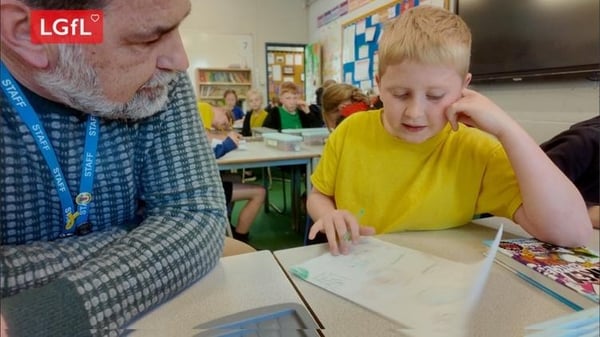
At Highfields Primary School in Manningtree, the staff are relatively early in their journey to embed technology within their curriculum. Rather than using digital tools for passive consumption, they have been exploring the power of Sandbox AR to transform an abstract design project into an active, life-sized learning experience.
For example, in one Year 4 project focused on redeveloping an outdoor learning area, they used the technology to hand the reins entirely over to our Year 4 pupils.
Here is how moving beyond flat, 2D paper blueprints redefined spatial problem-solving and collaboration for our class.
Engagement is Just the Start Line
The project began with a distinct pedagogical purpose: analysing and evaluating physical space. Instead of jumping straight into a software interface, pupils started by evaluating the real world.
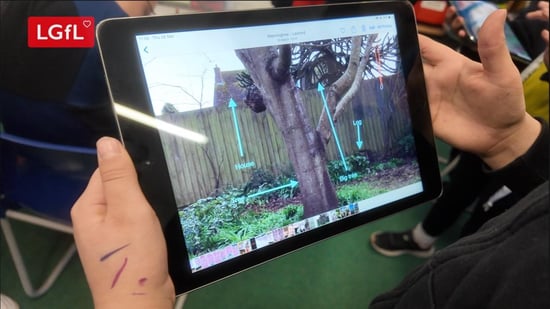
- Analysing the Space: Half of the class took iPads outside to photograph the existing Key Stage 1 outdoor learning area.
- Annotating with Intent: Back in the classroom, the remaining pupils annotated these photographs. They identified and discussed active elements (such as the mud kitchen, planting areas, and rope swings) to critically evaluate what worked well and why.
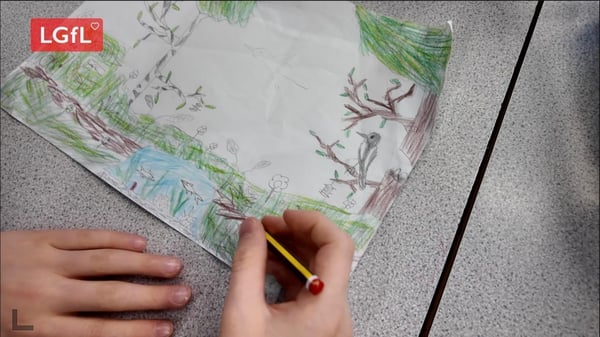
With a firm foundation of real-world observations, the pupils sketched out initial physical ideas on paper. Then, it was time to transition into the digital environment.
Sandbox AR: Creation Over Consumption
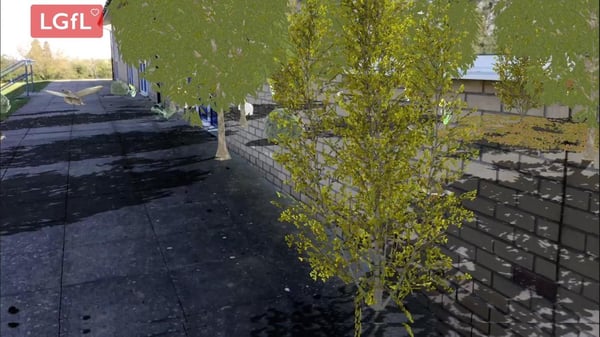
Using Sandbox on their iPads, the Year 4 children began translating their 2D sketches into a 3D digital reality. They imported structure concepts they had observed across the school and integrated them into custom digital blueprints.
The learning shift happened when the children enlarged their digital models to full scale. Using augmented reality, they physically walked through their own virtual environments at a life-size scale out on the school field.
As they traversed their structures, they recorded themselves explaining their choices—detailing exactly where they had placed learning elements, why they had placed them there, and how they expected peers to navigate the space.
[ 1. Analyse & Annotate ]
Pupils photograph and tag existing physical spaces.
[ 2. Sketch & Model ]
Flat paper designs are built into 3D worlds via Sandbox.
[ 3. Life-Size Walkthrough ]
Augmented reality scales design to 1:1 on the school field.
Moving the Needle: Spatial Trial, Error, and Growth
Why did this process flip the script on traditional primary school classroom planning?
1. Instant Spatial Feedback
On a piece of paper, a child can draw any layout they like without confronting the physical limitations or spatial realities of their design. By using technology to experience their blueprints at a life-size scale, they received immediate feedback.
Pupils could step back and say, "This section works perfectly," or realise, "This layout doesn't function at all." It created a tangible framework for them to instantly adapt, iterate, and enhance their work.
2. Organic, Pupil-Led Collaboration
The technology did not isolate the learners; it actively drove communication. We witnessed an incredible level of peer-to-peer problem-solving and mutual support. When structural challenges or software teething issues occurred (such as searching for specific alternative resources like ponds), the children spontaneously set up mini-teaching moments. Pupils proudly told each other, "I figured out how to do this, let me show you how it works!"
3. Deeply Immersive, Multimodal Contexts
Whether pupils are designing an outdoor learning hub or exploring ancient history (such as a parallel project where our classes built Egyptian tombs and walked past digital canopic jars and statues of Anubis), the learning shifts from abstract to visceral. They aren't writing about a flat picture on a projector screen; they are describing a space they feel they have actually stood inside. They hear it, see it, and feel it.
Key Takeaways for School Leaders
-
Universal Design for Learning (UDL): Utilising 3D spatial tools removes barriers for pupils who struggle to communicate complex, structured ideas through traditional writing or 2D drawing alone.
-
Embrace the Teething Issues: Do not be afraid of software limitations or moments where children have to look for creative alternatives. These friction points are exactly where critical thinking and collective problem-solving thrive.
-
Focus on the Substance: The goal of immersive EdTech isn't to generate a momentary "wow" response from a class. The goal is to provide multiple avenues for students to construct, test, and express their curriculum knowledge.
Have you experimented with Sandbox or integrated 3D modelling into your school's design and technology curriculum?