
A guest blog by Kelly Hannaghan, our lead MHWB consultant, who strives to develop a positive culture and talk about 'mental wealth', not just mental health.
There is something about September that makes education feel like it is starting all over again.
There is a familiar feeling of “right, here we go again.” But our schools aren't starting from zero. Our students are bringing their experiences from last year with them.
Our staff are bringing their experiences with them. And schools are entering another academic year against a backdrop of significant change and increasing complexity.
So perhaps the question we should be asking isn't:
Are we ready for September?
Perhaps it is:
Are we ready for what our schools will need from us this year?
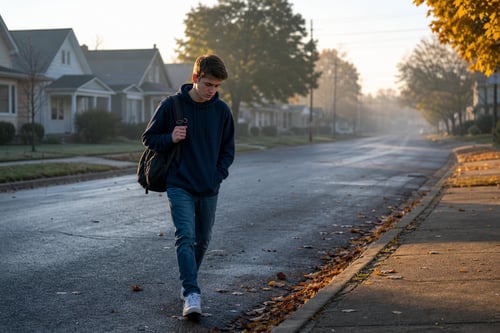
These are increasingly part of the everyday reality of education.
And this is why September preparation needs to become much more human.
The role of a school has never been simply about teaching a curriculum.
But the range and complexity of what schools are now expected to understand and respond to feels greater than ever:
The danger is that we respond by creating another initiative for every emerging challenge.
Another policy. Another action plan. Another training session. Another intervention. But perhaps what we need isn't more things.
Our 2026 - 2027 EdWell series is designed to support you throughout this academic year, laying the foundation for navigating the challenges ahead.
Let's look at four of these most pressing current challenges and how attending the EdWell training can support you and your school community with attendance, tricky transitions, the digital world and supporting our adults.
Attendance

This is one of the areas I'll be exploring in my upcoming LGfL EdWell Series session, Attendance, EBSA & Belonging in Schools, which focuses on looking beyond attendance figures and behaviour patterns to understand what might be happening beneath them.
Tricky Transitions
Another issue that deserves much more attention is transition.
We tend to think of transition as something that happens when a child moves from primary to secondary, or from Year 11 to post-16. But transitions are happening constantly:

For some young people, these seemingly ordinary moments can be significant pressure points.
The upcoming EdWell Series session, Managing Tricky Transitions & Behaviour in Schools, explores exactly this, helping schools understand what sits beneath behaviour and how we can better support pupils through these pressure points.
The Digital World
We cannot prepare for the year ahead without talking about social media.
Young people aren't experiencing the online world separately from their mental health.
It is intertwined with friendships, identity, belonging, comparison, body image, sleep, relationships and self-esteem.
And the landscape is changing incredibly quickly.
Schools, therefore, need to move beyond simplistic conversations about “screen time”.
We need better questions:

Because if we want young people to talk to us about their digital lives, we need to become genuinely interested in them.
The Navigating the Social Media Landscape training with LGfL is designed to help schools do exactly that, moving beyond policy and towards practical conversations with pupils and families about emotional and online safety.
Our Adults
We cannot sustainably improve children's wellbeing while the adults supporting them are exhausted.
Staff wellbeing isn't simply about resilience.
And it certainly isn't about handing someone a wellbeing leaflet when their workload is unmanageable.
Staff should feel able to say: “I'm struggling” without feeling that they have failed.
Because healthy schools don't rely on heroic individuals continually pushing through.
They create conditions where people can do good work without having to sacrifice themselves to do it.
This is why we are exploring Staff Wellbeing, Neurodiversity & Burnout – Leading a Healthy School Culture.
So, what should schools be asking themselves this September?
Perhaps not: “What initiatives are we introducing?”
Instead:
What are our students telling us?
Where are our pressure points?
What are our staff carrying?
How are we understanding behaviour?
How are we preparing for the digital world?
Do our families feel like partners?
What kind of culture are we creating?
Looking across the brand-new LGfL EdWell Series, there is a thread running through it all: 'Prevention'.
-
Understanding transitions before they become crises
-
Understanding attendance before absence becomes entrenched.
-
Understanding digital lives before something goes wrong.
-
Developing student voice rather than simply responding to student concerns.
-
Building coaching and reflective practice rather than waiting for staff to burn out.
-
Strengthening parental partnerships before relationships become difficult.
-
Understanding neurodiversity and trauma rather than interpreting every difference through a behaviour lens.
-
Strengthening the strategic role of Senior Mental Health Leads so that wellbeing becomes part of the culture rather than another initiative sitting alongside everything else.
Check out our Mental Health and Wellbeing Training Portfolio at LGfL
We are also continuing with the termly MHWB forum sessions
These termly, hourly after-school meetings, 3:45 pm - 4:45 pm, provide an opportunity for you to network and explore mental health and wellbeing themes prevalent in schools. We'll focus on practical support, share best practices, and discuss challenges across settings in a supportive, informative forum.
Our upcoming wellbeing forums will be discussing;
SEND/Neurodiversity - Giving every student a voice – 3rd December 2026
Staff Wellbeing - Preventing Burnout and supporting retention – 18th March 2027
Parental Partnership - Strengthening home-school positive communication – 14th July 2027
Connect with the Author of this Blog
LinkedIn: https://www.linkedin.com/in/kelly-hannaghan-a786a6164/
Twitter X https://x.com/mindworkmatters